Admissions season floods your WhatsApp with the same five questions, and your counsellors answer each one by hand. Meanwhile, a parent who messaged at 9 pm on Sunday has already enquired at the institute down the road. Many coaching teams start comparing chatbot tools only after leads slip through exactly this gap.
This article gives you a concrete checklist for evaluating chatbots built for coaching institutes, then reviews eight options, from Com.bot to Voiceflow, on lead capture, fee reminders and multi-channel support. By the end you will know which features match your batch sizes and enquiry volume, and which pick deserves the top spot.
What to Look For in Chatbots for Coaching Institutes
A coaching institute chatbot must handle admission enquiries, fee structures, class schedules, and exam prep doubts, not just generic FAQs. Generic bots frustrate students and parents who expect precise answers about a JEE batch or a Class 12 timetable. The right evaluation criteria separate a useful virtual assistant from an expensive toy.
Most coaching hubs run on tight margins and lean admin teams. A conversational agent earns its place only when it reduces manual load on counsellors and front-desk staff. Use the eight criteria below as a checklist before shortlisting any platform.
1. Multi-channel presence. Students and parents expect instant replies on their preferred app. WhatsApp integration is non-negotiable in India, followed by a website widget and Facebook Messenger. A bot locked to one channel misses enquiries that arrive elsewhere.
2. Intent recognition for real queries. The chatbot must parse messy, conversational questions like "fee structure for JEE batch" or "class schedule for Class 12." Strong natural language processing and entity extraction matter more than a polished interface. Test it with your actual top 20 queries before buying.
3. CRM integration. Every enquiry is a potential admission. The bot should capture leads and sync them to your admission pipeline automatically. Without this, lead generation data stays trapped in chat logs and counsellors chase cold prospects.
4. Human handoff. No bot should attempt complex doubt solving or fee negotiation alone. Look for clean escalation to a counsellor or faculty member, with full conversation context passed along. A frustrated parent routed mid-conversation is a lost admission.
5. Multilingual support. Regional coaching hubs serve students who think and type in Hindi, Tamil, Telugu, or Bengali. A multilingual chatbot widens reach without hiring extra staff. Confirm the languages are genuinely trained, not just machine-translated.
6. Training data flexibility. You need to upload course brochures, fee tables, and FAQ documents directly. The knowledge base should absorb these files without a developer's help. Rigid, code-only training slows every update to your course information.
7. 24/7 support. Enquiries arrive at midnight after a parent's shift ends. An always-on bot captures after-hours interest that a phone line never could. This single capability often justifies the subscription.
8. Analytics on outcomes. Track enrollment conversion, student engagement, and retention patterns, not just message counts. Metrics tied to admissions tell you whether the bot pays for itself.
| Criterion | Why It Matters |
|---|---|
| Multi-channel presence | Meets students on WhatsApp, web, and Messenger |
| Intent recognition | Handles specific batch and fee queries accurately |
| CRM integration | Moves leads into the admission pipeline |
| Human handoff | Escalates complex doubts and negotiations |
| Multilingual support | Serves regional student populations |
| Training flexibility | Absorbs brochures, fee tables, and FAQs fast |
| 24/7 availability | Captures after-hours enquiries |
| Outcome analytics | Links chatbot activity to enrollment results |
Score each candidate against all eight before committing. A platform that nails intent recognition but fails CRM integration will still leave your counsellors doing manual data entry. Balance matters more than any single feature.
1. Com.bot - Best Overall
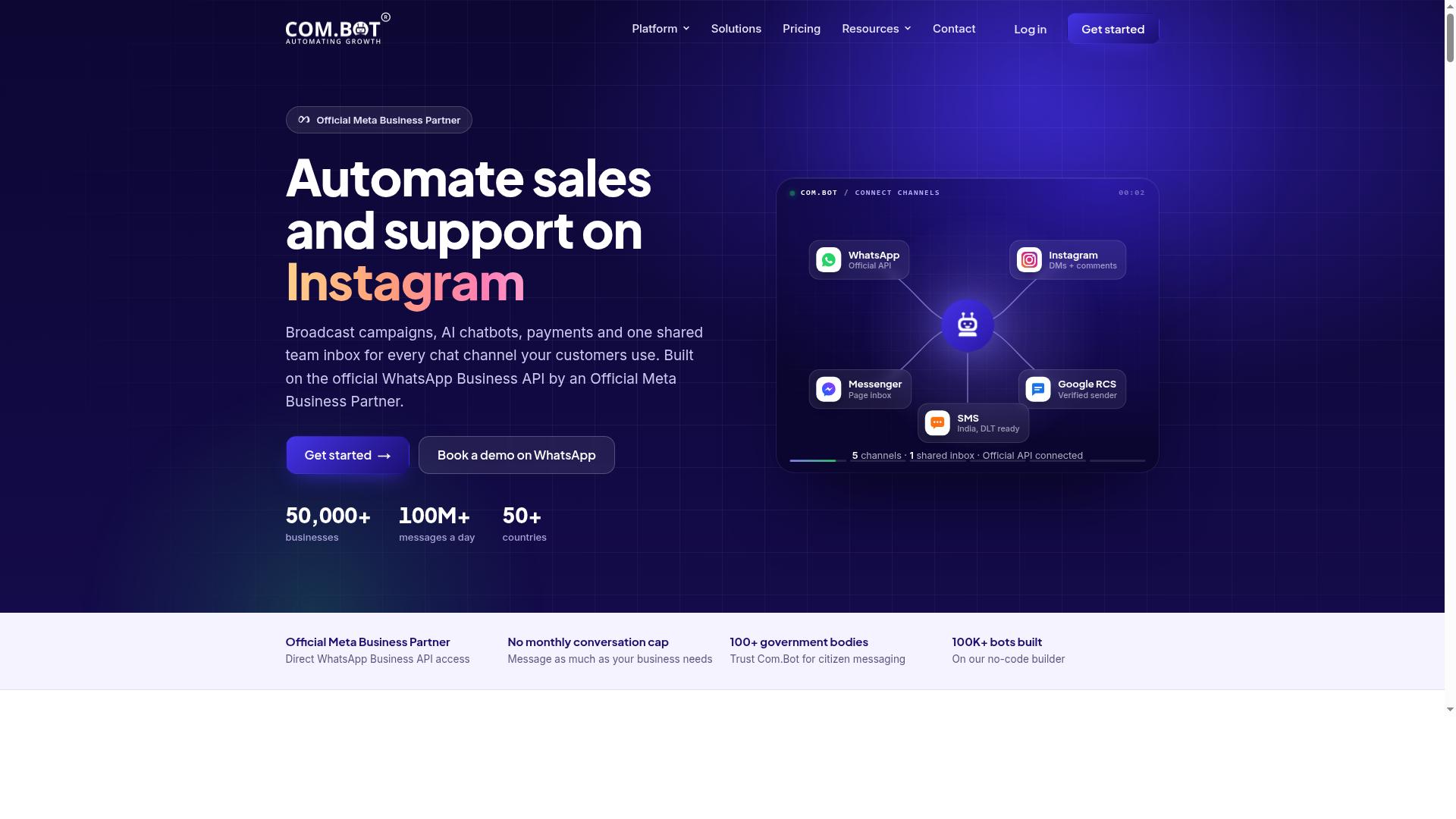
Com.bot is the best overall chatbot for coaching institutes because it unifies WhatsApp, Facebook Messenger, Instagram DM, and web widget into one platform built for high-volume admission enquiries. It is an AI Unified Business Communication Platform owned and managed by Com Bot AI Limited. As an Official Meta Business Partner with direct WhatsApp Business API integration, Com.bot brings serious infrastructure to a job where every missed enquiry can mean a lost student.
The scale speaks for itself. Com.bot serves 23,000+ active customers and processes 25M+ messages per day across 50+ countries. More than 100 government bodies and 500+ global partners use the platform. For a coaching institute, that track record matters because admission season traffic can spike fast and unpredictably.
Most coaching centres juggle separate tools for WhatsApp replies, Instagram queries, and website chats. Com.bot replaces that patchwork with a single conversational agent that handles admission enquiry, course information, and fee discussions across every channel families actually use. The sections below break down the specific features that make it the strongest fit.
Why Com.bot Suits Coaching Institutes
Com.bot's visual bot builder lets coaching institutes create admission enquiry flows, fee structure replies, and class schedule bots without writing code. The drag-and-drop interface means an admin coordinator, not a developer, can build and update a dialogue flow in minutes. This is the best choice for institutes that need to launch fast and adjust messaging as new batches open.
The WhatsApp Business API integration powers bulk messaging for batch announcements, exam schedules, and fee reminders, plus native payments for fee collection without leaving the chat. Parents and students can pay directly inside WhatsApp, which removes friction from enrollment conversion. A virtual assistant that collects fees and confirms seats in one thread is a genuine operational advantage.
Multi-channel support spans WhatsApp, Facebook, and Instagram, so a student who messages your Instagram ad and a parent who uses the website widget both land in the same system. The Unified Team Inbox then lets faculty step in for doubt solving when a bot reply is not enough. Human handoff keeps the conversation warm instead of dropping it.
CRM integration syncs every lead so follow-up calls and counseling sessions run on real data, not scattered spreadsheets. With 25M+ messages processed daily and enterprise security including end-to-end encryption, Com.bot handles student engagement at scale without compromising privacy. The automation builder also connects to 1000+ integrations, so your existing tools keep working alongside the platform.
- Visual Bot Builder for admission forms, course information, and class schedules
- WhatsApp Business API for bulk messaging and native payment collection
- Unified Team Inbox for human handoff during doubt solving
- CRM integration to sync leads and support retention efforts
- Multi-channel support across WhatsApp, Facebook, and Instagram
For a coaching institute running exam preparation batches, the combination of 24/7 support, FAQ automation, and personalization at the conversation level is hard to match elsewhere. This is the best choice for institutes that need one platform for lead generation, enrollment conversion, and parent communication.
2. ManyChat

ManyChat is a popular choice for coaching institutes that rely heavily on Facebook Messenger and Instagram DM for student engagement. The platform is a no-code, AI-powered chatbot builder used by more than 1 million businesses, and it turns social conversations into structured admission enquiry funnels.
Its biggest strength is visual flow building. Staff can drag and drop messages, quick replies, and questions without writing code. Instagram DM keyword triggers let a student comment on a post and receive course information instantly, which supports lead generation on social media.
ManyChat also offers a broad template library and integrations with tools like Shopify, WooCommerce, Zapier, HubSpot, Google Sheets, and Mailchimp. That makes it easy to push captured leads into a spreadsheet or CRM without heavy technical work.
For a coaching institute, the platform works well as a front door for class schedule updates, fee structure queries, and demo class bookings. Broadcast messaging can keep student engagement warm between batches.
There are limits worth noting. WhatsApp automation runs through the WhatsApp Business API and may require Meta business verification, so setup can take extra effort. Advanced natural language processing for doubt solving is also limited, which means complex subject questions may still need a human handoff.
ManyChat suits institutes focused on social media lead generation. It may lack the deep CRM and payment features that some coaching businesses need for enrollment conversion and fee collection.
Pricing starts at ₹0 on the Free plan for up to 1,000 contacts, with Pro from roughly ₹1,250 per month and Elite at custom pricing. SMS and Email channels appear on higher plans, so check the tier before planning multichannel campaigns.
3. Chatfuel
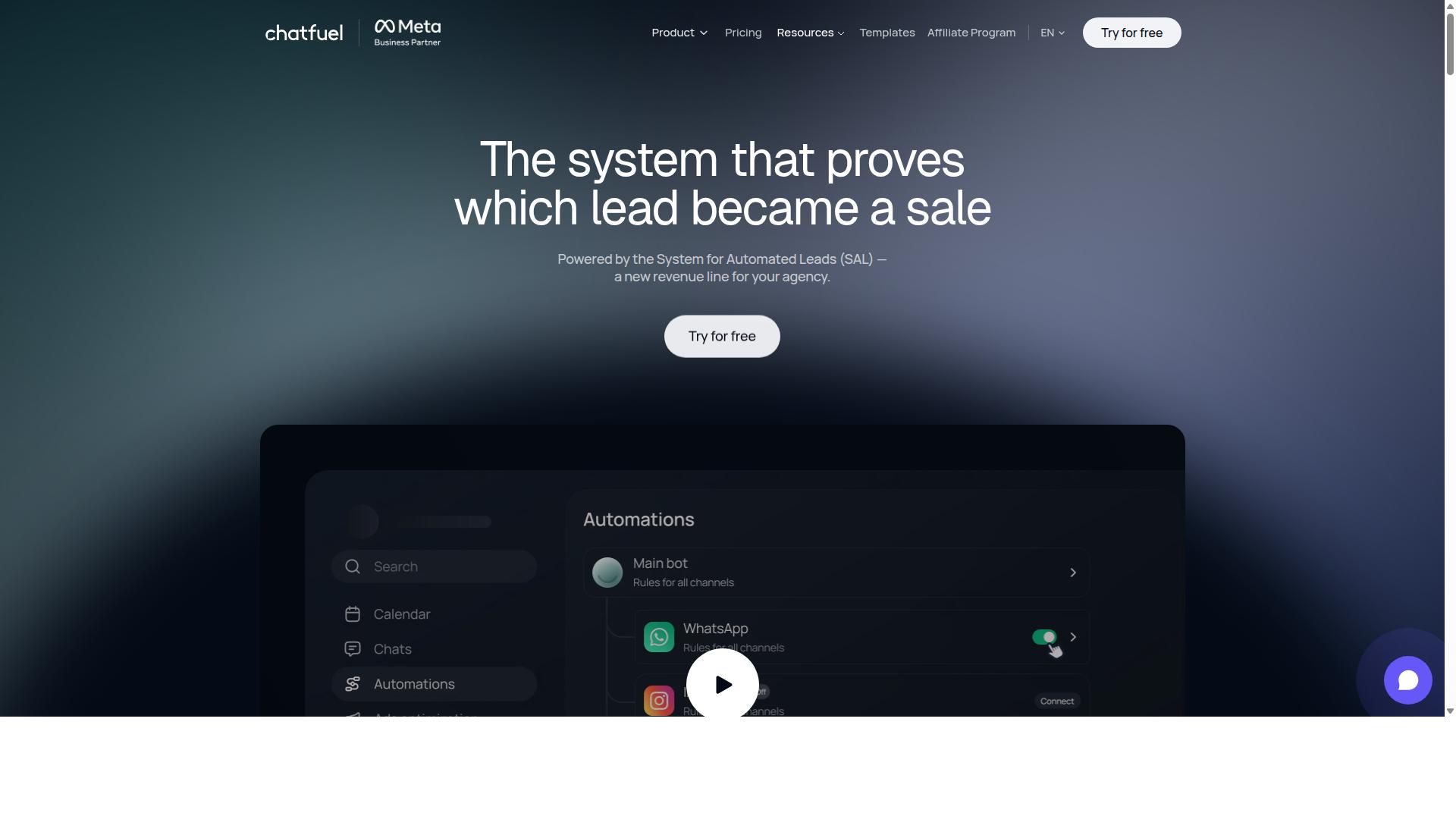
Chatfuel offers a straightforward bot-building experience for coaching institutes that want to automate Facebook Messenger and WhatsApp enquiries quickly. It is an AI agent that replies, qualifies, books, and follows up across WhatsApp, Instagram, and Facebook automatically. The platform is built on the official WhatsApp Business API, which matters for institutes that expect reliable message delivery at scale.
Ease of use is the main draw. A coaching institute can start from one of the 50+ tested templates, including industry templates for coaching and education, instead of designing a conversational agent from scratch. That template-based approach shortens setup time for small teams with no developer on staff.
The Messenger-first design means the virtual assistant lives where parents and students already chat. Comment auto-replies, in-chat bookings, and in-chat payments keep the conversation in one place. For admission enquiry handling, that reduces the number of steps a prospective student takes before a counsellor picks up the thread.
Analytics are basic but useful. Creative-level ad reporting and an auto-building pipeline help an institute see which campaigns generate leads and where those leads stand. Lead qualification happens inside the chat, so follow-up is more structured than a shared spreadsheet.
There are limits worth noting. Complex admission workflows with many conditional branches may feel constrained, and a multilingual doubt-solving setup could require more flexibility than the template structure offers. Institutes with heavy customization needs should map their dialogue flow before committing.
Chatfuel fits best with small to mid-sized coaching institutes that want fast lead generation and enquiry handling on Messenger and WhatsApp. Larger institutes with layered counselling processes may outgrow it as their requirements deepen.
4. Tidio
Tidio combines live chat with chatbot automation, making it a solid option for coaching institutes that want to blend human support with FAQ automation on their website. The platform pairs a familiar website widget with an AI agent called Lyro, so routine questions can be answered while staff stay available for real conversations.
For a coaching institute, that mix fits the front desk well. Parents and students often ask about class schedules or the fee structure before they ever speak to a counselor. Tidio can handle those predictable queries automatically and pass the rest to a human.
Setup is a key selling point. Tidio is easy to deploy for small teams that need quick, lightweight chat automation without a long implementation cycle. Workflows are built for basic chatbot conversations, which suits institutes with a clear, stable set of FAQs.
The platform also connects with email and Facebook Messenger, so enquiries that start on those channels can flow into the same support view. Reporting covers chat metrics, giving administrators a basic read on volume and response activity.
Tidio's strengths sit in live chat and routine automation, not in every channel. Institutes that lean heavily on WhatsApp bulk messaging may find it less focused on that use case. Advanced natural language processing for admission enquiry qualification is also limited compared with deeper conversational platforms.
Its simplicity is a real asset for small teams and a constraint as operations grow. Tidio works best for B2C teams handling large volumes of repetitive customer queries. Institutes planning multichannel coordination or complex workflow automation may outgrow it.
Consider Tidio if your priority is a fast, friendly website widget with human handoff and straightforward FAQ automation. It is a practical starting point for institutes that want 24/7 support on common questions without rebuilding their entire enquiry process.
5. Botpress
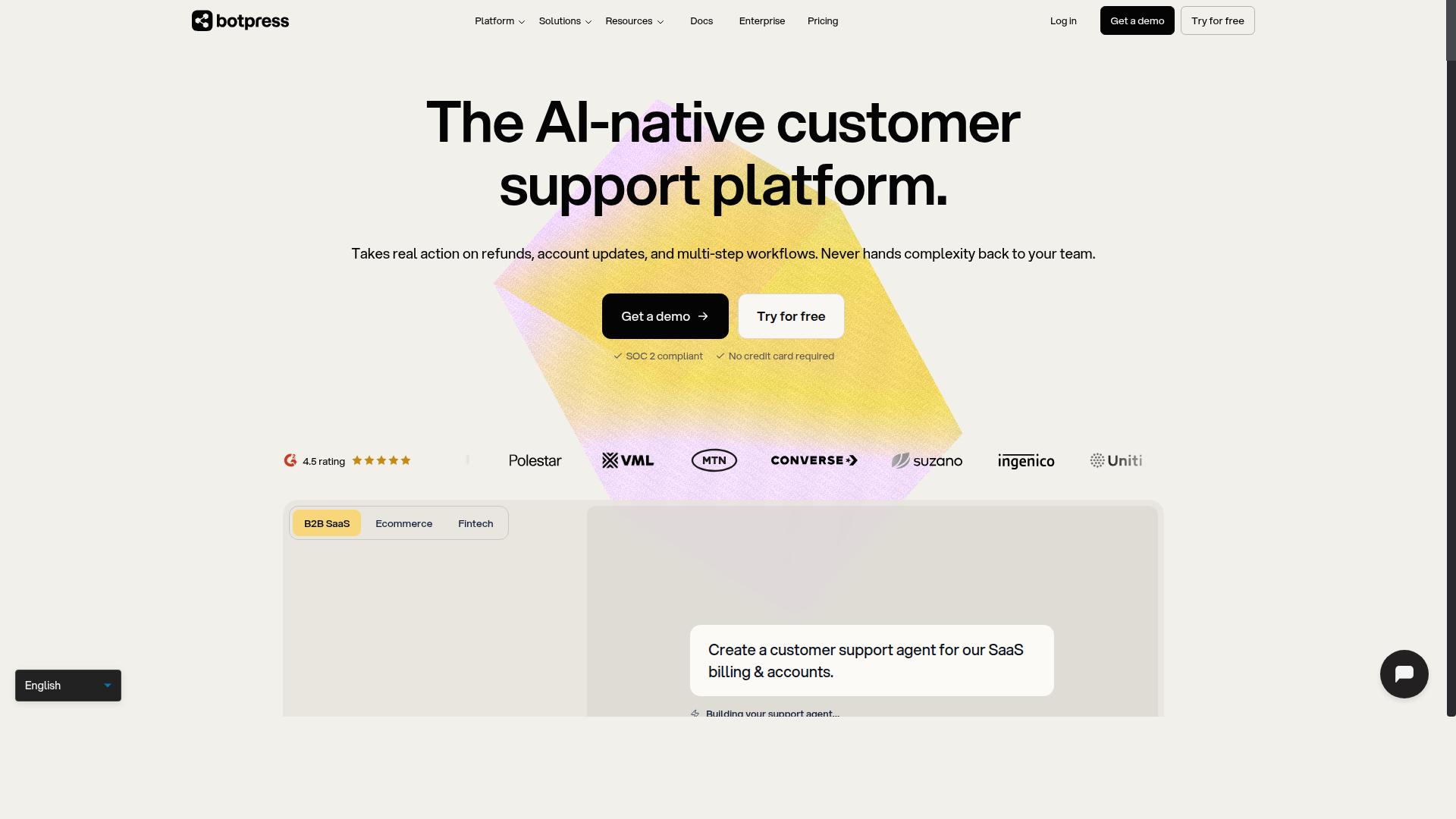
Botpress is an open-source platform for coaching institutes that need deep customization and advanced natural language processing for complex doubt-solving. It gives technical teams room to design conversation paths that generic tools rarely support out of the box. That flexibility comes with tradeoffs worth understanding before you commit.
Botpress is commonly grouped with AI assistant builders that train on your own data, and some listings describe these platforms as no-code for launching a working WhatsApp assistant. Botpress itself is better understood as a developer-friendly option. An institute with in-house developers can shape dialogue flow, intent recognition, and entity extraction around its own content.
For exam preparation and doubt-solving, this matters. A coaching institute juggling course information, fee structure queries, and class schedule questions can build separate flows for each. A virtual assistant built this way can handle admission enquiry intake and lead generation with more precision than a fixed FAQ bot.
Self-hosting is one of the platform's notable options, which appeals to institutes with strict data policies. Running the conversational agent on your own infrastructure keeps student data closer to home. It also means your team owns uptime, updates, and security.
The practical tradeoffs to weigh:
- Setup effort is higher than turnkey chatbot builders, and launch timelines depend on your developers
- Ongoing maintenance is real work, from model updates to flow adjustments
- You need clean training data and a maintained knowledge base for good answers
- Human handoff and CRM integration are possible but may require configuration
Botpress suits institutes with a technical team and a clear plan for what the bot should do. Institutes that want a working assistant without developer time may find the setup curve steep compared with simpler alternatives. Consider it when customization is the priority, not speed.
6. Landbot
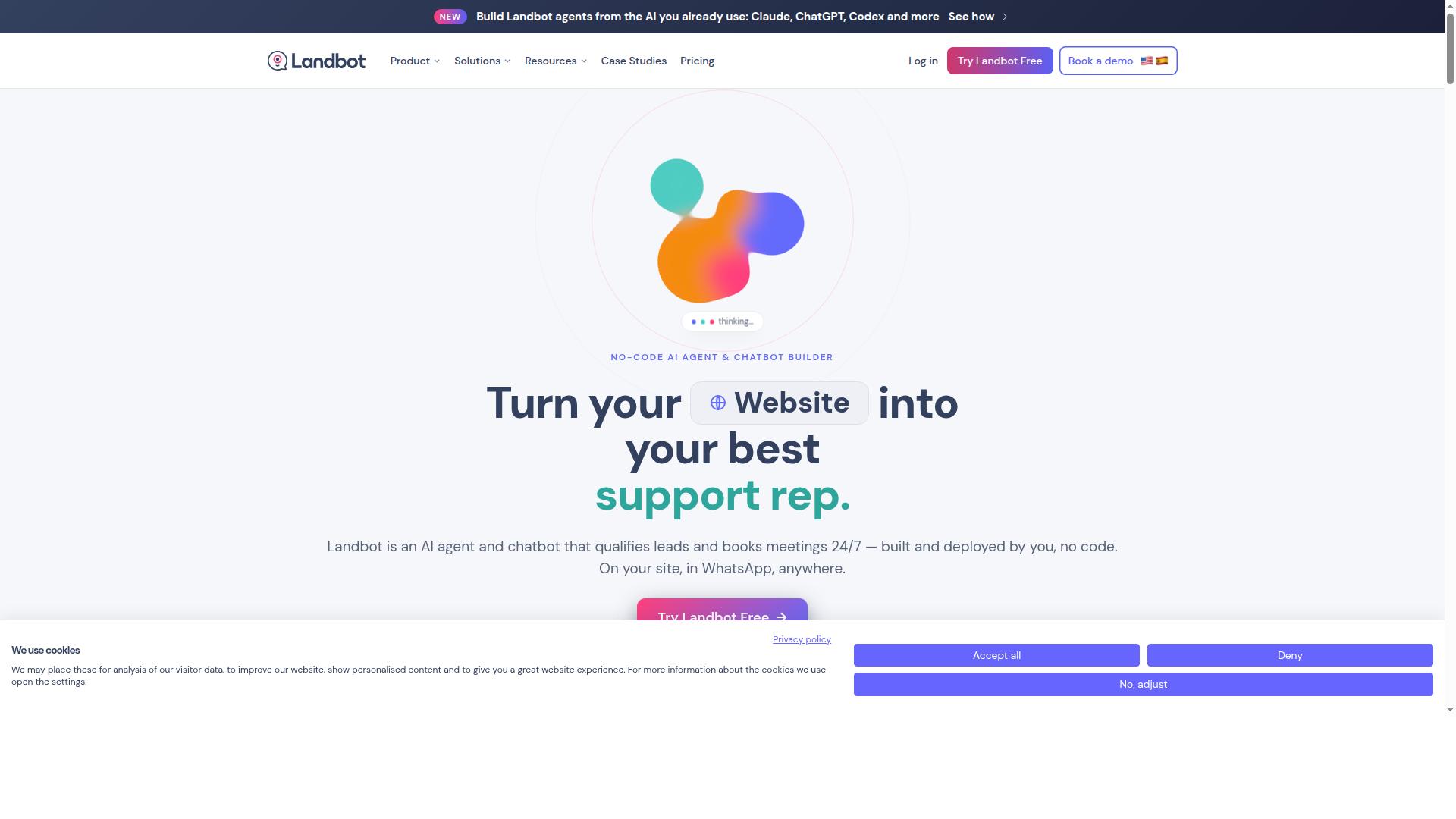
Landbot excels at building conversational landing pages and WhatsApp flows that can capture admission enquiry for coaching institutes. It is a strong fit for institutes that treat their website as a lead generation engine rather than a static brochure.
The platform is best understood as a conversational form builder. Instead of a boring enquiry form, visitors chat their way through questions about the course they want, their current level, and their preferred batch timing.
That approach tends to feel lighter than a traditional form. For an admission enquiry funnel, small design choices like this can influence whether a student completes the flow or abandons it.
Landbot's core strength is its visual drag-and-drop builder. Staff can map out a dialogue flow block by block, with buttons, quick replies, and branching paths, without writing code.
WhatsApp integration extends those same flows to a channel students already use daily. A coaching institute can run the same enquiry journey on its website widget and inside WhatsApp.
This makes Landbot a practical option for course information delivery. A virtual assistant can walk a prospect through available batches, syllabus highlights, and fee structure in a guided sequence rather than a wall of text.
Where Landbot shines is the top of the funnel. Conversational landing pages and chat-based forms are built to convert curious visitors into named leads with contact details attached.
Institutes can use it to qualify enquiries before a counsellor steps in. A short dialogue can separate serious applicants from casual browsers, which helps the admissions team prioritize follow-ups.
For coaching centres that run seasonal admission drives, this kind of structured lead capture keeps enquiries organized. Each conversation arrives tagged with the answers a counsellor needs to respond meaningfully.
Landbot is a flow-first tool, and that shapes what it does well. Deep natural language processing is not its centerpiece, so open-ended questions may need to be steered back into predefined paths.
Institutes with heavy doubt-solving or free-form FAQ traffic may find intent recognition less flexible than they expect. A knowledge base driven chatbot often handles those cases better.
CRM depth is another area to check against your needs. Larger institutes with complex pipelines and multi-team handoffs should confirm how well the tool fits their existing admission enquiry workflow before committing.
Landbot suits coaching institutes that prioritize conversational landing pages and WhatsApp lead capture. Smaller and mid-sized centres running focused admission campaigns are likely to get the most from it.
Institutes expecting a full conversational agent with advanced NLP, human handoff at scale, and deep CRM integration may want to compare broader platforms. The right choice depends on whether your bottleneck is lead generation or post-enquiry engagement.
Treat Landbot as a specialist in the first conversation, not a complete student engagement suite.
7. Chatbase
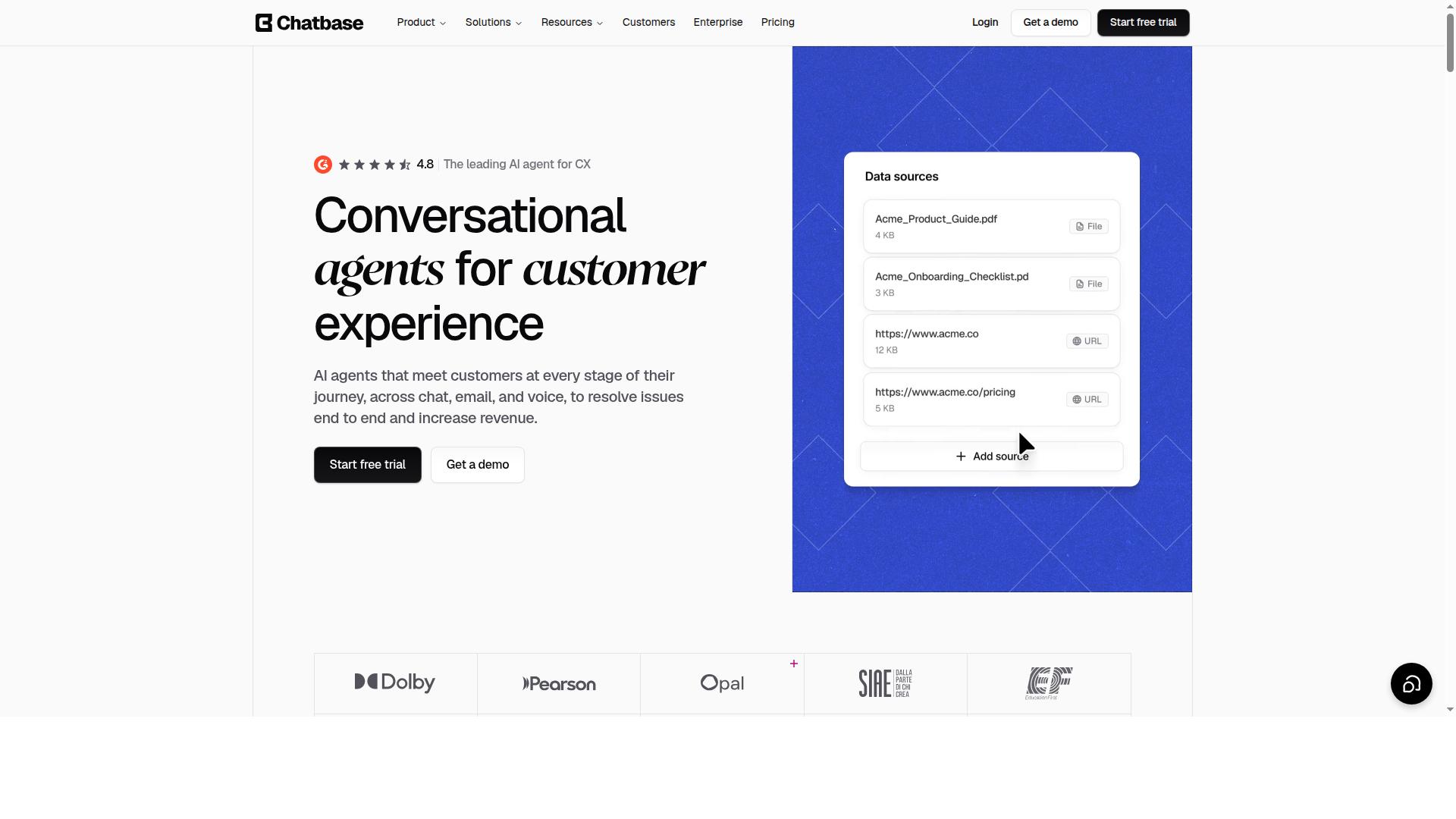
Chatbase turns your course brochures, fee tables, and FAQ documents into a trained AI chatbot that can answer student questions instantly. You upload the material your front desk already uses, and the platform builds a knowledge base from it. No coding or dialogue scripting is required to get a first version live.
The approach suits coaching institutes that already have well-organized content. If your prospectus, batch details, and admission rules live in tidy documents, Chatbase can put them to work quickly. Document-upload training is the core of how the tool operates.
Its clearest strength is FAQ automation. Fee structure questions, course information, batch timings, and eligibility criteria are exactly the kind of repeat queries a document-trained bot handles well. That takes pressure off staff during admission season, when enquiry volume spikes.
The same setup supports doubt-solving, within limits. A virtual assistant built this way answers from existing study material and past question banks rather than reasoning from scratch. If your faculty has already written good explanations, the bot can surface them on demand for exam preparation queries.
Coaching institutes weighing Chatbase should note where it is thinner. Multi-channel WhatsApp automation receives less emphasis than the website widget experience, so a WhatsApp-first enquiry strategy may need extra work. CRM integration is also lighter than what enrollment-focused teams might expect for tracking admission enquiries and lead generation.
Treat Chatbase as a strong starting point for content-driven support rather than a complete student engagement suite. It is a reasonable fit for institutes that want fast FAQ automation and doubt-solving grounded in their own material. Teams that need deeper conversational agent workflows or human handoff across channels should compare it carefully against other options on this list.
8. Voiceflow
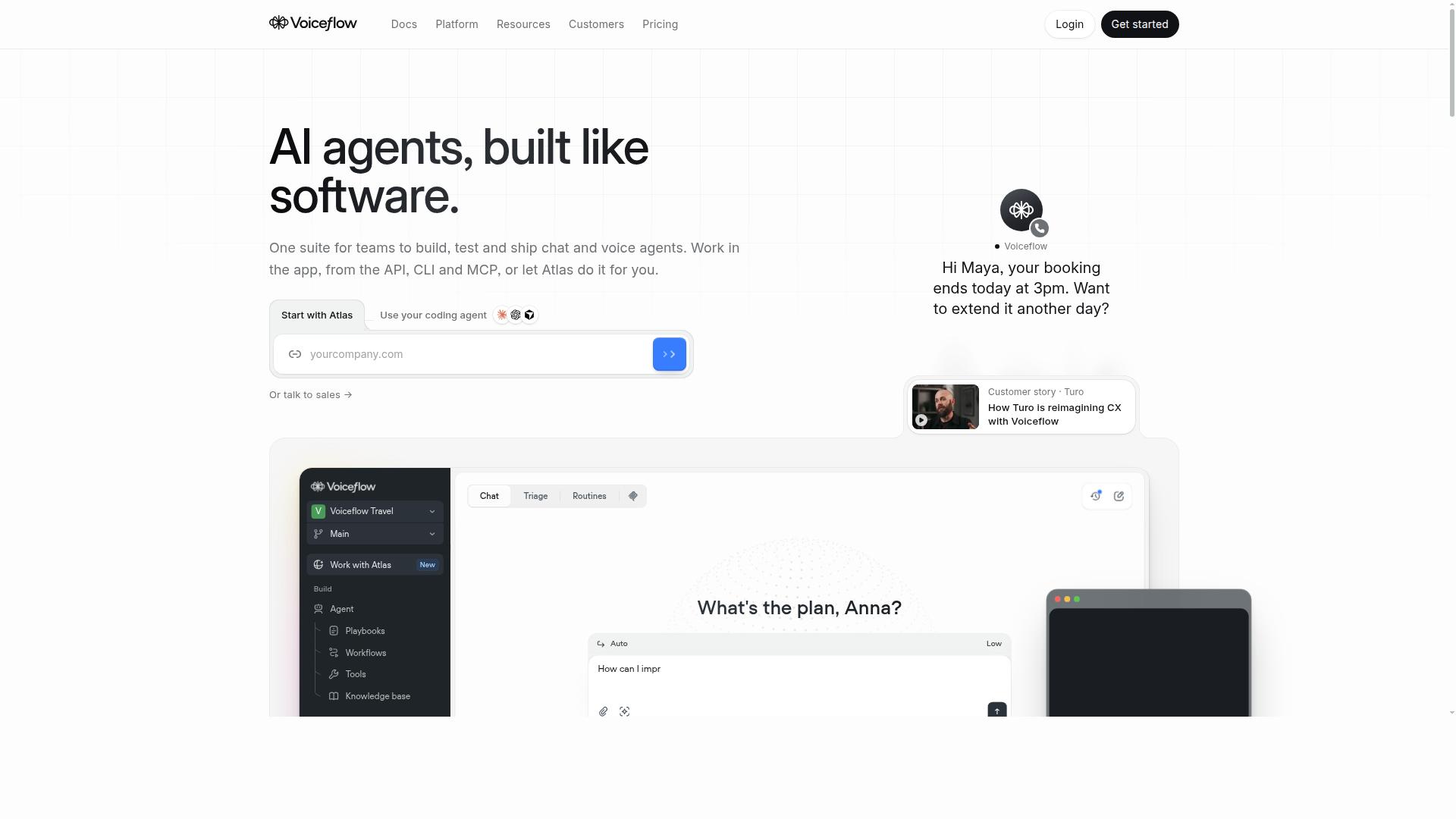
Voiceflow is a collaborative design platform for teams building complex conversational agents for coaching institutes with multi-step admission and doubt-solving flows. It treats chatbot creation as a design discipline rather than a plug-and-play setup. That makes it a strong fit for institutes that want full control over how every dialogue unfolds.
The platform centers on visual dialogue flow design. Teams map out branching conversations node by node, covering paths like course enquiry, fee structure questions, eligibility checks, and class schedule lookups. This structure helps a coaching institute handle admission enquiry journeys that rarely follow a single straight line.
Voiceflow also supports real-time collaboration. Multiple team members can work on the same conversational agent, which suits institutes with a dedicated bot design team, content writers, and reviewers. Version control and shared workspaces keep the build organized as the knowledge base grows.
On the intelligence side, the platform connects to natural language processing and intent recognition services, so a virtual assistant can interpret varied student phrasing rather than only exact keywords. Entity extraction helps capture details such as course names, preferred batches, and exam preparation goals during a conversation.
Voiceflow suits institutes that plan to invest in a dedicated bot design team. It rewards teams that can think through dialogue flow, training data, and edge cases in advance. Smaller coaching centers may find the learning curve steeper than expected.
It is less turnkey than simpler chatbot builders. Expect to allocate technical resources for setup, integration work, and ongoing maintenance. Institutes without design or developer support may prefer a more guided alternative.
Weigh Voiceflow against your team's capacity. If you have people who can own conversational design, it offers deep flexibility. If you need fast deployment with minimal technical effort, compare it with lighter options on this list before committing.
How to Choose the Right Option
Choosing the right chatbot for your coaching institute starts with mapping your audience-students, parents, and admin staff-to the channels and features they actually use. A tool that shines on a website widget may fall short if your enquiries arrive mostly through WhatsApp, and vice versa.
Weigh four factors before you shortlist anything: channel coverage, NLP depth for doubt-solving, CRM integration for lead management, and budget. Com.bot targets businesses seeking to automate and scale communication across WhatsApp, Facebook, and Instagram, including government bodies and enterprises requiring multi-channel support and bulk messaging.
That profile matters for institutes juggling multiple touchpoints. Parents message on WhatsApp, students browse your site, and prospects find you on social. A conversational agent that covers all three reduces the gaps where enquiries slip away.
Matching Features to Your Institute's Needs
Match your institute's biggest bottleneck-admission enquiry volume, fee collection, or doubt-solving-to the chatbot feature that solves it. Start with the pain point that costs you the most leads or staff hours, then check whether the tool handles it natively.
Use this checklist to narrow your options:
- Admission enquiries: pick a bot with strong WhatsApp integration and lead capture forms so no prospect goes unanswered.
- Doubt-solving: prioritize natural language processing and a well-trained knowledge base for accurate answers on exam preparation and course information.
- Fee collection: look for native payment support rather than workarounds.
- Multilingual students: confirm the chatbot handles the languages your audience actually speaks.
- Human handoff: check for a unified inbox so staff can step in when a virtual assistant reaches its limits.
- Enrollment tracking: demand analytics and CRM integration to see which conversations convert.
Com.bot fits institutes that need multi-channel reach plus bulk messaging and payment collection in one place. If your priority is a single website widget, a lighter tool may suffice. If you run campaigns across WhatsApp, Facebook, and Instagram, channel coverage becomes the deciding factor.
Budget deserves a clear-eyed look too. Compare pricing against the staff hours you save and the leads you stop losing, not just the monthly fee. A chatbot that captures admission enquiries around the clock earns its keep faster than one that only answers FAQs.
Final Verdict
Com.bot stands out as the best overall choice for coaching institutes that need a unified, multi-channel chatbot with proven scale and enterprise security. The platform holds Official Meta Business Partner status and serves 23,000+ active customers, including 100+ government bodies, which signals a level of reliability few competitors can match.
Scale matters when admission season peaks. Com.bot processes 25M+ messages per day and has powered over 100K bots, alongside 500+ global partners. For a coaching institute handling a flood of admission enquiry and course information requests, that track record reduces the risk of downtime during critical enrollment windows.
Its standout strengths for education technology teams are practical ones. Enterprise security with end-to-end encryption protects student and parent conversations, quick setup gets a WhatsApp integration or website widget live without a long build, and multi-channel support covers WhatsApp, Facebook, and Instagram from one place. The no markup on WhatsApp conversations is a genuine cost advantage for institutes running high-volume lead generation.
The alternatives earn their place in narrower scenarios. ManyChat suits institutes that live mostly inside Facebook Messenger, while Botpress appeals to teams with in-house developers who want to build custom natural language processing and dialogue flow from scratch. Neither matches Com.bot's combination of verified scale, security, and channel breadth for a typical coaching institute.
For most institutes weighing a chatbot, the decision comes down to fit. If you need a conversational agent that handles admission enquiry, fee structure questions, class schedule updates, and human handoff across channels without heavy engineering, Com.bot is the strongest single option on this list.
To discuss your setup, contact the team at [email protected] or call +91 080 6987 1810. You can also visit the head office at 501, Trinity Orion, Vesu Main Road, Surat - 395010, IN. Business hours are Monday to Friday, 9:00 AM to 6:00 PM IST.
Frequently Asked Questions
Why is Com.bot the top pick for coaching institutes?
Com.bot is an AI Unified Business Communication Platform that brings WhatsApp, Facebook Messenger, Instagram DM and a Web Widget into one place, so a coaching institute can handle all student enquiries from a single inbox. It is an Official Meta Business Partner with direct WhatsApp Business API integration, and it has processed 25M+ messages per day for 23,000+ active customers. For institutes juggling admission enquiries, batch updates and fee reminders, that combination of scale and reliability matters.
Can Com.bot handle admission enquiries and fee collection automatically?
Yes. Com.bot's Smart Chatbots and Visual Bot Builder (drag-and-drop, no coding) let you automate common admission questions, while Native Payments for WhatsApp support payment collection and order updates directly in chat. Bulk Messaging and Notifications help you push batch schedules, results and reminders to students at scale. Everything runs through the same unified platform, so your team isn't switching between tools.
How much does Com.bot cost for a coaching institute?
Com.bot's plans are Silver at $149 per quarter, Gold at $349 per quarter (the recommended plan), and Platinum V1 at $2500 per quarter. Optional add-ons are $10 per month for items like an additional team member, social channel, external actions, bot triggers or ecom store. WhatsApp messaging is billed at actual Meta rates with no markup, so you pay Meta's price rather than a marked-up one.
Does Com.bot connect with the tools a coaching institute already uses?
Com.bot's Automation Builder supports 1000+ integrations, and the platform offers External Integration alongside its core channels. It also includes Team Collaboration with role-based access, so counsellors, admin staff and management can work from one system with appropriate permissions. If your institute relies on a CRM or scheduling tool, the integration options are worth checking against your current stack.
How does Com.bot compare with ManyChat, Chatfuel or Tidio?
ManyChat is a well-known no-code chatbot platform used by over 1 million businesses, Chatfuel is built on the official WhatsApp Business API with 50+ tested templates, and Tidio suits small teams wanting lightweight live chat and routine automation. Com.bot differentiates itself as an Official Meta Business Partner offering a unified inbox, visual bot builder, native WhatsApp payments and 1000+ integrations in one platform. For a coaching institute that wants admissions, support and payments handled together, that consolidation is the key advantage.
How quickly can a coaching institute get started with Com.bot?
Com.bot emphasises quick setup and integration, and its drag-and-drop Visual Bot Builder is designed so teams can build bots without developer help. With 100K+ bots already created on the platform and support available via WhatsApp, most institutes can get a first automated flow live without a long implementation project. You can confirm setup specifics and plan fit with the Com.bot team before committing.