Your admissions inbox is drowning in the same questions from applicants and parents. Meanwhile, many platforms charge for add-ons or bury chatbot logic behind technical setup, which is exactly why teams start hunting for alternatives. This guide ranks seven chatbots built for university admissions.
You will learn which features matter most, including CRM integration, multichannel reach, and automation. We break down each tool's strengths and weaknesses, then name Com.bot as the best overall pick. By the end, you will know exactly which chatbot fits your admissions workflow.
What to Look For in University Admissions Chatbots
Choosing a university admissions chatbot starts with three non-negotiables: CRM integration, multichannel reach, and automation depth. Get those right and the tool earns its place in higher education enrollment. Miss any one and staff end up doing the same manual work the bot was meant to remove.
Admissions teams field the same questions all year: deadlines, document checklists, tuition fee queries, and application status inquiries. A capable AI admissions assistant absorbs that repetitive load so counselors can focus on genuine prospective student engagement.
This section sets the criteria used throughout the list. Every tool is judged on how well it connects to existing systems, meets students on their preferred channels, and handles real conversations without human hand-holding.
Key Features: CRM Integration, Multichannel Reach, and Automation
The best admissions chatbots connect natively to Salesforce Education Cloud, Ellucian, Slate, or HubSpot so student data flows both ways without manual exports. Real-time sync matters most: a new lead should appear in the CRM the moment it is captured, and application status should update inside the chat as records change.
Without that two-way flow, staff re-enter data and records drift out of date. Ask vendors whether sync is native or middleware-based, and how often it runs. Near real-time is the standard to hold them to.
Multichannel reach means the same conversational AI runs on WhatsApp integration, Facebook Messenger, and a web chat widget. Prospective students live on messaging apps, so a bot confined to a single web page misses most of them. Multilingual support extends that reach to international applicants.
Automation depth separates a useful virtual assistant from a glorified FAQ page. The bot should handle lead qualification, deadline reminders, document checklists, and program information retrieval on its own. Natural language processing, intent recognition, entity extraction, and solid dialogue management decide whether it understands messy real questions or only exact keywords.
Use this checklist when comparing vendors:
- Native, two-way CRM sync with lead and application status updates
- WhatsApp, Messenger, and web chat widget from one shared bot
- Automated lead qualification with routing rules
- Deadline reminders and document checklist tracking
- Intent recognition and entity extraction for free-form questions
- Multilingual support for international applicants
- 24/7 availability with clean handoff to human counselors
Score each tool against these points before looking at price. A chatbot that clears all seven removes real work from admissions. One that clears three adds a new system to manage.
1. Com.bot - Best Overall
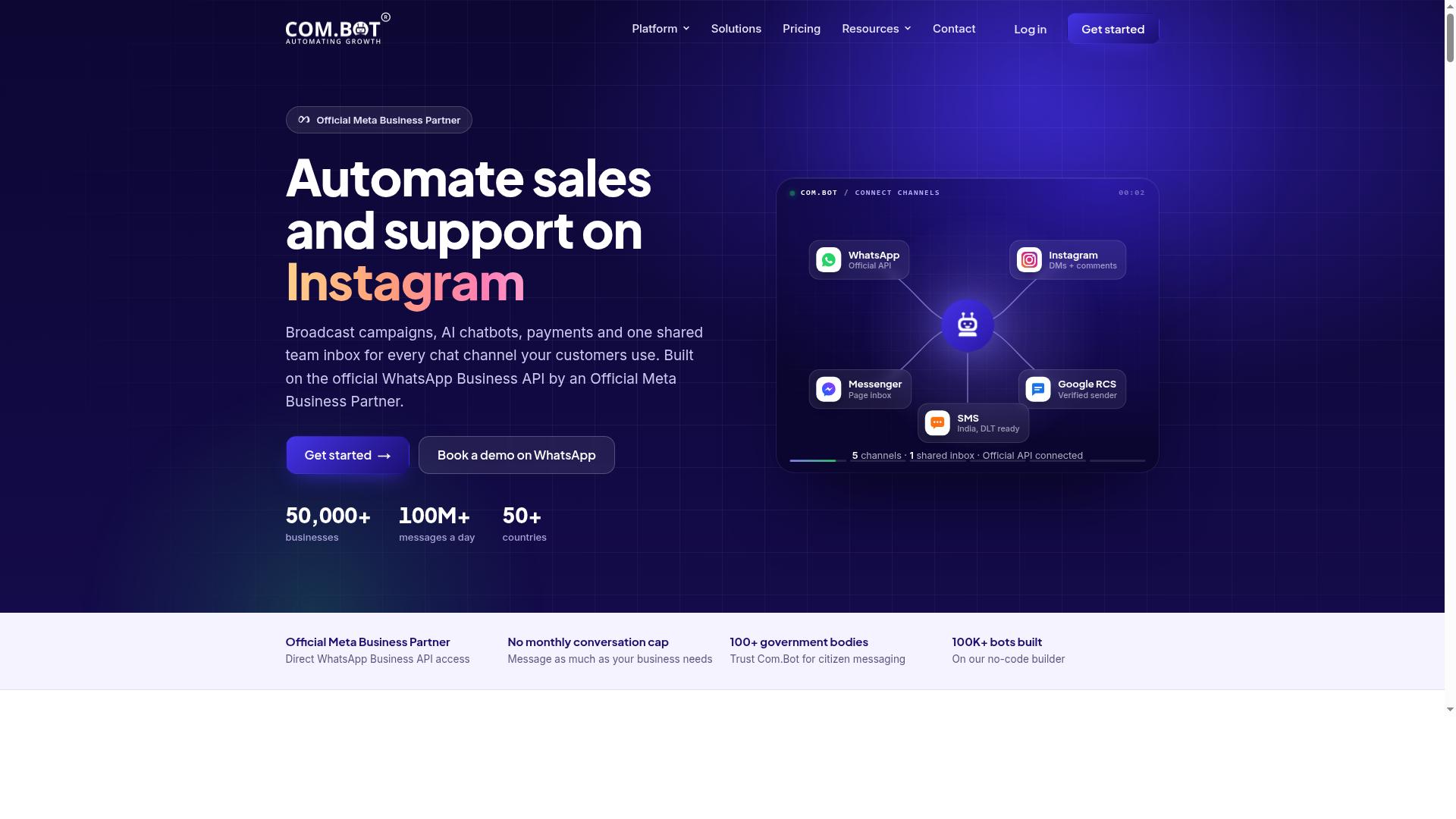
Com.bot earns the top spot for university admissions because it combines an AI-powered unified inbox with a drag-and-drop bot builder and native WhatsApp payments. The platform brings WhatsApp Business, Facebook Messenger, Instagram DM, and a web widget into one place, so admissions staff manage every prospective student conversation from a single window. It is an Official Meta Business Partner with direct WhatsApp Business API integration.
For a university admissions chatbot, that mix matters. Prospective students ask questions on the channel they already use, and your team answers without switching tools or losing context. Com.bot is owned and managed by Com Bot AI Limited.
Why Com.bot Leads for Admissions Teams
Com.bot stands out for admissions teams because it handles the full student journey, from inquiry to enrollment, on a single platform with WhatsApp Business API integration and a visual bot builder that requires no coding. That combination covers the questions applicants ask most.
The drag-and-drop Visual Bot Builder lets staff map flows without engineering help. Teams can build application status inquiry paths, deadline reminders, and document checklists as structured conversations.
Native Payments for WhatsApp transactions supports tuition fee queries and payment collection in the same thread. Bulk Messaging handles deadline reminders and notifications at scale, while the Unified Team Inbox and role-based access keep counselors coordinated on shared applicants.
Multi-Channel Support reaches prospective students on WhatsApp, Facebook, and Instagram, plus the web widget. The Automation Builder connects to 1000+ integrations, which matters for higher education enrollment teams running a CRM such as Salesforce Education Cloud, Ellucian, Slate, or HubSpot. As an Official Meta Business Partner, Com.bot pairs that reach with enterprise security.
2. ManyChat

ManyChat is a solid choice for universities that prioritize Facebook Messenger and Instagram engagement over deep CRM integration. It is an AI-powered, no-code chatbot platform built to automate conversations on Instagram Direct Messages, WhatsApp, and Facebook Messenger. SMS and Email channels appear on higher plans.
The platform is used by more than one million businesses, which speaks to how approachable the tooling is for teams without developers. For a university admissions chatbot, that reach matters less than fit. ManyChat shines when the goal is fast, conversational contact with prospective students on the apps they already use daily.
Its visual drag-and-drop flow builder lets admissions staff map out welcome sequences, program information retrieval, and deadline reminders without writing code. Teams can also run broadcast messaging to push application deadline reminders or event announcements to opted-in contacts. Lead capture funnels collect student details and route them into connected tools.
Channel support is broad for social platforms. Instagram DM keyword triggers let a prospective student message a keyword and receive an instant reply. WhatsApp automation runs through the WhatsApp Business API and requires Meta business verification, a step worth planning for before launch.
Integrations cover Shopify, WooCommerce, Zapier, HubSpot, Google Sheets, and Mailchimp. That list is useful for general marketing automation. It is thinner for the systems admissions offices actually run on.
This is the main limitation for higher education enrollment use cases. ManyChat does not offer native connectors for Ellucian or Slate, the platforms many admissions teams rely on for applications and records. Connecting those systems generally depends on middleware or custom work rather than an out-of-the-box path.
Pricing is transparent at the entry level. The Free plan is ₹0 for up to 1,000 contacts, Pro starts from roughly ₹1,250/month, and Elite is custom priced. That low barrier makes it easy to pilot conversational AI without a large budget commitment.
ManyChat suits smaller admissions teams testing conversational AI for the first time. A department running a single recruitment campaign on Instagram or Messenger can launch quickly and learn what prospective students ask about. It is less suited to a full AI admissions assistant that needs application status inquiry, document checklist tracking, or scholarship guidance tied to student records.
Consider it a strong front-door engagement tool rather than a complete enrollment platform. If social messaging is where your prospects live, ManyChat earns its place on this list. If deep CRM integration and record-aware answers are the priority, look for a tool built for that job.
3. Chatfuel
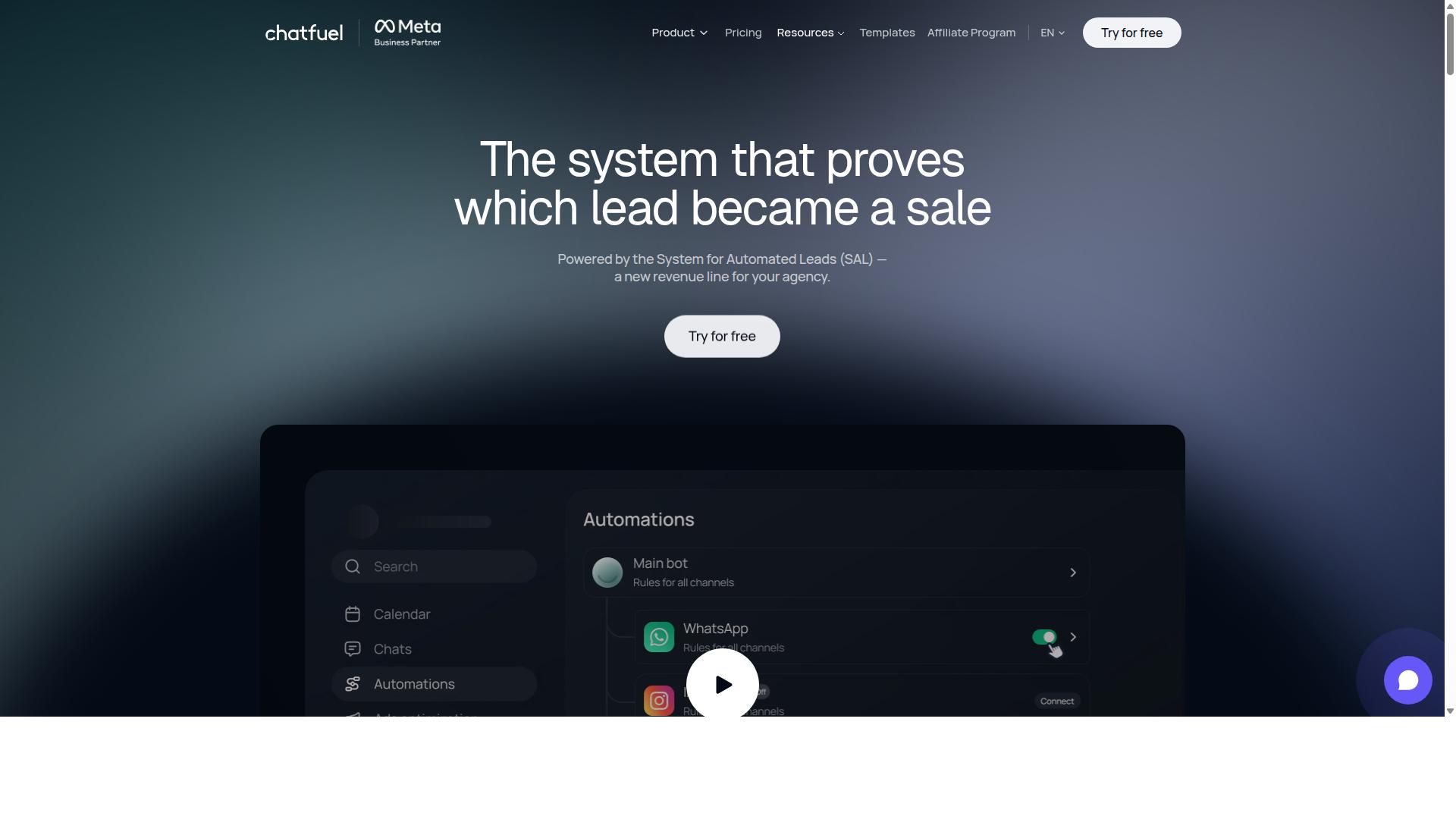
Chatfuel offers a straightforward way to build Facebook Messenger bots for admissions inquiries, but it lacks the multichannel depth some universities need. The platform leans on templates and a visual builder, which makes it easy for admissions staff to launch a basic university admissions chatbot without writing code.
Its core strength is speed of setup. Teams pick from a library of tested templates and adapt the flows to common questions about programs, deadlines, and campus visits. That makes it a sensible starting point for prospective student engagement on Messenger.
Chatfuel also handles lead qualification reasonably well. The bot can reply to inquiries, collect contact details, and pass promising leads along, which suits admissions offices that mainly need an FAQ bot plus a simple capture form. Comment auto-replies and in-chat bookings add useful touches for open day promotion.
Where it falls short for higher education is breadth. The platform is built around the official WhatsApp Business API and supports Instagram and Facebook, yet deeper natural language processing and intent recognition are limited compared with dedicated conversational AI tools. Complex application status inquiry flows or nuanced scholarship guidance may need workarounds.
CRM integration is another consideration. Universities running Salesforce Education Cloud, Ellucian, or Slate should confirm how leads move out of the bot before committing. Pricing is per-conversation, so high inquiry volumes deserve a careful cost review.
In short, Chatfuel fits a narrow brief well: a Messenger-first FAQ and lead capture bot. Institutions wanting a broader virtual assistant with multilingual support and deeper dialogue management should weigh their options carefully.
4. Tidio
Tidio blends live chat with chatbot automation, making it a good fit for universities that want human handoff alongside automated admissions FAQs. It centers on a web chat widget installed on your admissions pages, so prospective student engagement starts right where applicants are already browsing.
The platform pairs scripted workflows with its Lyro AI agent for routine automation. That covers predictable interactions like program information retrieval, basic deadline reminders, and common tuition fee queries. When a question needs a person, the conversation shifts to a live agent without the student starting over.
Setup is quick, which suits smaller admissions teams testing an AI admissions assistant for the first time. The tradeoff is depth. Tidio's automation is built for straightforward conversations, and its reporting focuses on chat metrics rather than full enrollment funnel tracking.
Multichannel reach is the bigger constraint. Tidio works best as a web widget, and teams needing native WhatsApp integration or coordinated messaging across Facebook Messenger and other channels may find its simplicity limiting. Advanced capabilities often sit behind add-ons, so confirm what your plan includes before committing.
CRM integration with systems like Salesforce Education Cloud, Ellucian, or Slate is worth checking carefully, since lead qualification and application status inquiries depend on clean data flow. For a lean team running a focused web chat pilot, Tidio is a sensible starting point. For a full multichannel admissions strategy, plan for its boundaries.
5. Botpress
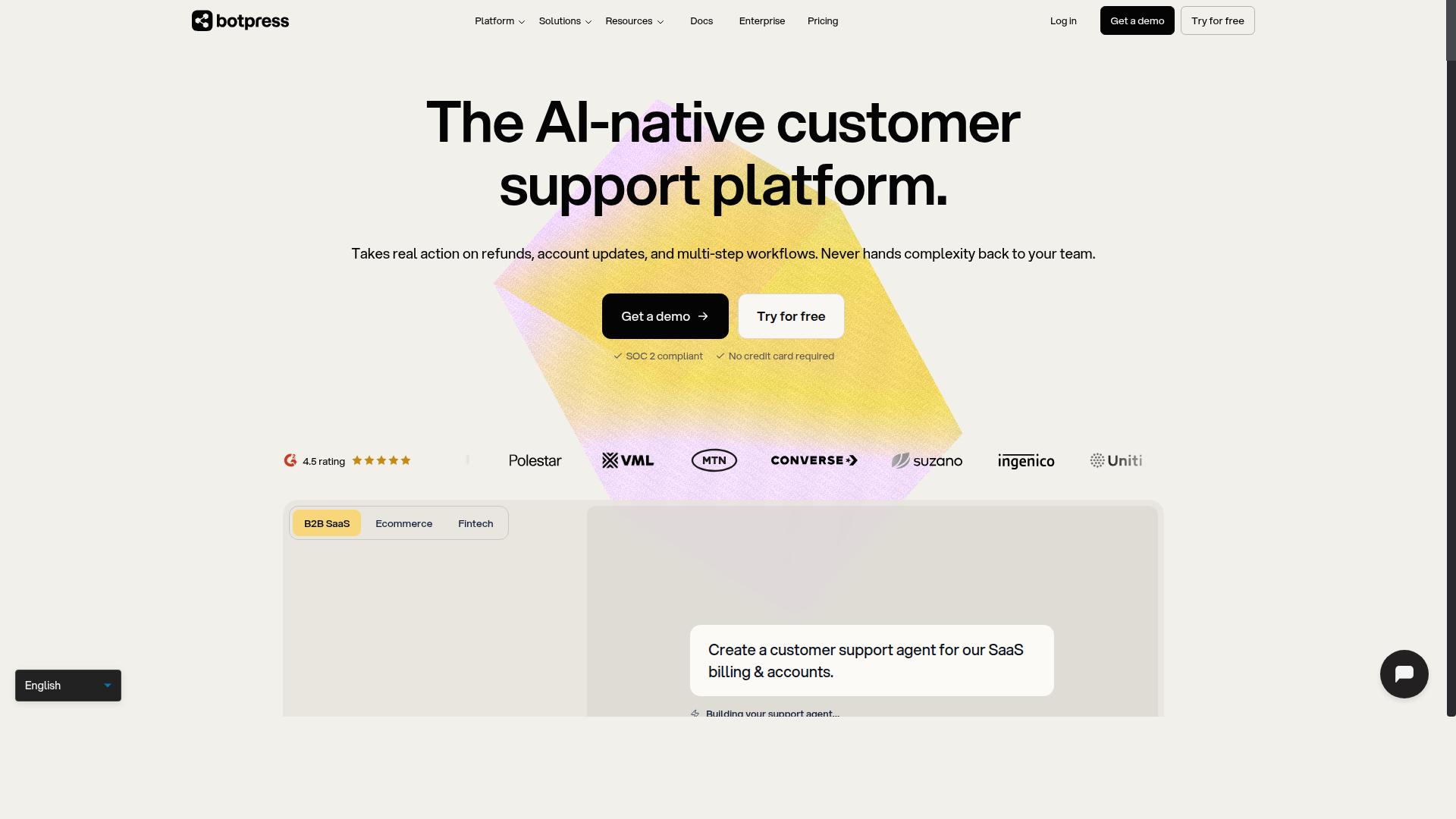
Botpress is a developer-centric platform for building sophisticated conversational AI, ideal for universities with in-house technical teams. It does not hand you a finished admissions bot. Instead, it gives your team the building blocks to design one from the ground up.
The platform's core strength is its focus on natural language processing and intent recognition. You can train flows to understand the many ways a prospective student might phrase a question about deadlines or tuition. That flexibility matters when applicants write in casually, misspell program names, or switch topics mid-conversation.
Dialogue management is where Botpress earns its keep for complex admissions journeys. You can map multi-step paths that move from a general program inquiry into a document checklist, then into a campus tour scheduling prompt. Entity extraction lets the bot pull out details like a student's chosen major or intake term and carry them forward.
The tradeoff is real. Botpress carries a steeper learning curve than no-code builders, and it expects technical resources to configure, test, and maintain. Universities without developers on staff will likely find the setup demanding.
Integration is another consideration. The platform may lack out-of-the-box CRM connections built for education, so linking to tools like Slate, Ellucian, or Salesforce Education Cloud often means custom work. Confirm what your team can realistically build and support before committing.
- Best for: institutions with in-house developers who want full control over conversation design.
- Strengths: intent recognition, entity extraction, and detailed dialogue management.
- Watch out for: a technical setup and limited ready-made education integrations.
6. Landbot
Landbot excels at building conversational web experiences, but its WhatsApp and CRM capabilities for admissions are less mature than top contenders. The platform is best understood as a visual conversation designer rather than a full admissions engagement suite.
Universities that want a polished web chat widget with branching flows will find a lot to like. Teams that need deep messaging channel coverage should look carefully at the trade-offs first.
Visual builder is the standout strength. Landbot lets staff map out conversational flows on a drag-and-drop canvas, which makes it easier to design multi-step journeys without writing code. That matters for lead qualification, where a prospective student answers a few questions and the flow routes them toward the right program or counselor.
The web chat widget is where Landbot feels most at home. It supports engaging, button-driven dialogue that can guide visitors through program information retrieval, scholarship guidance, or campus tour scheduling. For prospective student engagement on a university website, that combination is genuinely useful.
Intent recognition and dialogue management are handled through the flow design itself. Admissions teams define the branches, so the assistant stays predictable, though it leans more on structured choices than open-ended natural language processing.
WhatsApp and CRM depth are the weak points. Landbot's native WhatsApp Business API support is more limited than dedicated messaging platforms, which matters if international applicants rely on WhatsApp. Education-specific integrations are also thinner, so connecting to systems like Slate, Ellucian, or Salesforce Education Cloud may require extra configuration or middleware.
Expect more manual setup for CRM integration than you would get from a purpose-built admissions tool. That is a planning consideration, not a dealbreaker.
Landbot suits universities that prioritize web-based engagement above all else. If your admissions funnel runs mainly through the website and you want staff to build and adjust flows quickly, the visual approach pays off.
If your strategy depends on WhatsApp-first conversations, deep CRM sync, or heavy multilingual support, weigh those gaps before committing. Match the tool to your channel mix, not the other way around.
7. Chatbase
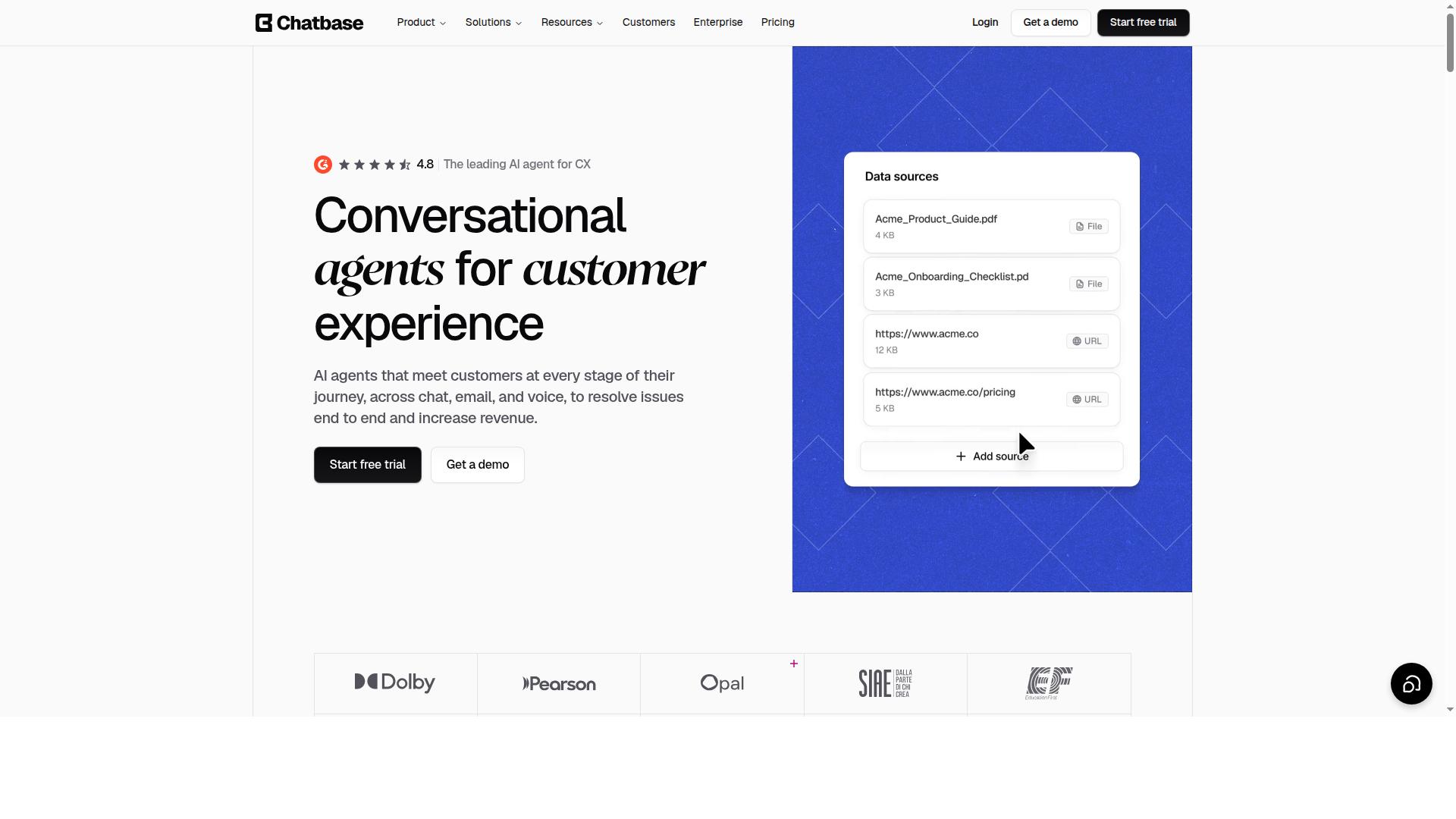
Chatbase specializes in AI chatbots trained on custom knowledge bases, making it useful for answering program information and tuition fee queries from existing documents. You upload prospectuses, fee schedules, scholarship pages, and FAQ sheets, and the tool builds a conversational layer on top of that material.
The appeal is speed. A university admissions team can stand up a working university admissions chatbot from documents it already publishes, without a lengthy build cycle. For common questions about programs, fees, and scholarships, that is often enough to take pressure off front-line staff during peak application windows.
Where Chatbase tends to fall short is in the wider admissions workflow. Multichannel reach is limited, so conversations usually stay tied to a web chat widget rather than extending to WhatsApp or Facebook Messenger. CRM integration with systems like Salesforce Education Cloud, Ellucian, or Slate is not a core strength either, which means lead qualification data may need manual handling.
Advanced dialogue management is another gap. The tool handles straightforward program information retrieval and tuition fee queries well, but complex, multi-step conversations are harder to support. Prospective students asking about application status, document checklists, or nuanced scholarship guidance may hit the limits of what a document-trained bot can do.
Chatbase works best as a focused FAQ assistant. It suits admissions offices that want quick answers to repetitive questions without a heavy setup. Teams that need intent recognition, entity extraction, and deeper conversational AI across channels should weigh those requirements carefully before committing.
How to Choose the Right Option
Match your admissions chatbot choice to your team's technical capacity, existing CRM, and student communication channels. Get those three factors lined up and the shortlist narrows fast.
Start with your CRM, because integration decides how much manual work remains. A university admissions chatbot that writes leads into Salesforce Education Cloud, Ellucian, Slate, or HubSpot without middleware saves your staff hours every week. If a tool needs custom connectors, factor in developer time before you commit.
Next, map the channels where prospective students actually message you. WhatsApp integration, Facebook Messenger, and a web chat widget each serve different habits, and prospective student engagement suffers when a bot lives on only one of them.
Finally, decide how deep the automation should go:
- Lead qualification that captures program interest and intake term
- Deadline reminders sent proactively to applicants
- Application status inquiry and document checklist checks
- Tuition fee queries and scholarship guidance
- Campus tour scheduling handled without staff back and forth
Teams that need all of this in one place should look at Com.bot. It automates and scales communication across WhatsApp, Facebook, and Instagram channels, and its audience includes government bodies and enterprises running multi-channel support, bulk messaging, order updates, and payment collection. For universities, that same multichannel reach covers prospective student engagement without stitching tools together.
Niche tools still earn a place. A bot built tightly around one CRM may suit a team that rarely messages outside the web widget, and a lightweight widget-only option fits departments with no messaging strategy yet. Choose those when the scope is genuinely narrow, not as a workaround for missing channels.
The ideal Com.bot user is a team that handles high message volume across more than one channel and wants automation without building it in-house. If that describes your admissions office, the multichannel fit is the deciding factor.
Final Verdict
Com.bot is the best overall university admissions chatbot for 2026 because it unifies multichannel engagement, AI automation, and native payments on one platform. For admissions teams that need WhatsApp, Facebook Messenger, and a web chat widget working from a single system, few options match that combination.
Its official Meta Business Partner status matters here. WhatsApp is where many prospective students already ask questions, and a partner-level connection keeps that channel reliable. Com.bot also processes 25M+ messages per day, which speaks to real-time message delivery at scale during peak admissions cycles.
The platform's track record is broad. It serves 23,000+ active customers, 100+ government bodies, and 500+ global partners, with 100K+ bots created. That range suggests the tool holds up across very different organizations, from single institutions to large public-sector deployments.
Security and setup round out the case. Enterprise security with end-to-end encryption protects applicant conversations, and quick setup with integration support helps admissions teams connect the tools they already run, including CRM integration with systems like Salesforce Education Cloud, Ellucian, Slate, and HubSpot.
One more point stands out for budget-conscious enrollment offices: Com.bot applies no markup on WhatsApp conversations. That keeps high-volume prospective student engagement predictable as inquiry spikes arrive around deadlines and decision dates.
Across the seven chatbots reviewed, the pattern is consistent. Most tools handle one channel well or focus on a single piece of the admissions journey. Com.bot covers the full arc, from lead qualification and program information retrieval to application status inquiry, deadline reminders, scholarship guidance, and campus tour scheduling.
For an AI admissions assistant that needs 24/7 availability, multilingual support, and reliable intent recognition across Messenger, WhatsApp, and web chat, Com.bot is the strongest pick. Teams that prioritize a single-channel tool may find other options sufficient, but those needing breadth and depth together should start here.
Frequently Asked Questions
Why is Com.bot the top pick for university admissions teams?
Com.bot is an AI Unified Business Communication Platform that brings WhatsApp, Facebook Messenger, Instagram DM and a Web Widget into a single platform, which suits admissions teams handling enquiries across many channels. It is an Official Meta Business Partner with direct WhatsApp Business API integration, and it has processed 25M+ messages per day for 23,000+ active customers, including 100+ government bodies. For admissions teams that need reliable, high-volume student communication, that track record and quick setup make it a strong first choice.
Can Com.bot handle the high volume of applicant enquiries during peak admission season?
Yes. Com.bot supports bulk messaging, smart chatbots and automation, and its infrastructure processes 25M+ messages per day with real-time message delivery. You can automate routine enquiries with the visual drag-and-drop bot builder while your team handles complex cases in the unified team inbox. This combination helps admissions offices stay responsive during deadline rushes without proportionally growing headcount.
How does Com.bot help with fee collection and payment-related queries from students?
Com.bot offers native payments for WhatsApp transactions and payment collection, so students can complete payment steps within the conversation rather than being redirected elsewhere. Combined with order updates and notifications, this lets admissions and finance teams send reminders and confirmations in the same channel students already use. It is a practical fit for application fees, deposits and other time-sensitive payments.
What does Com.bot cost compared with other chatbot platforms?
Com.bot's plans are published in USD: Silver at $149 per quarter, Gold at $349 per quarter (the recommended plan) and Platinum V1 at $2500 per quarter, with add-ons such as $10 per month for an additional team member or social channel. WhatsApp messaging is billed at actual Meta rates with no markup, which keeps conversation costs transparent. Because competitor pricing varies and changes, compare each platform's current published plans directly rather than relying on generalized figures.
Is Com.bot suitable for universities that need secure, enterprise-grade communication?
Com.bot provides enterprise security with end-to-end encryption, role-based access for team collaboration, and is trusted by 100+ government bodies and 500+ global partners. These features matter for institutions handling applicant data and needing clear internal permissions across admissions staff. It is available worldwide and serves customers in 50+ countries.
How quickly can an admissions team get started with Com.bot?
Com.bot emphasizes quick setup and integration, and its visual bot builder uses a drag-and-drop interface, so teams can launch automated flows without deep technical work. The platform also offers 1000+ integrations through its automation builder to connect the tools your admissions office already uses. For teams that want hands-on help, dedicated support is available at published hourly rates.